The Fundamental Role of DNA in Regulating Body Functions
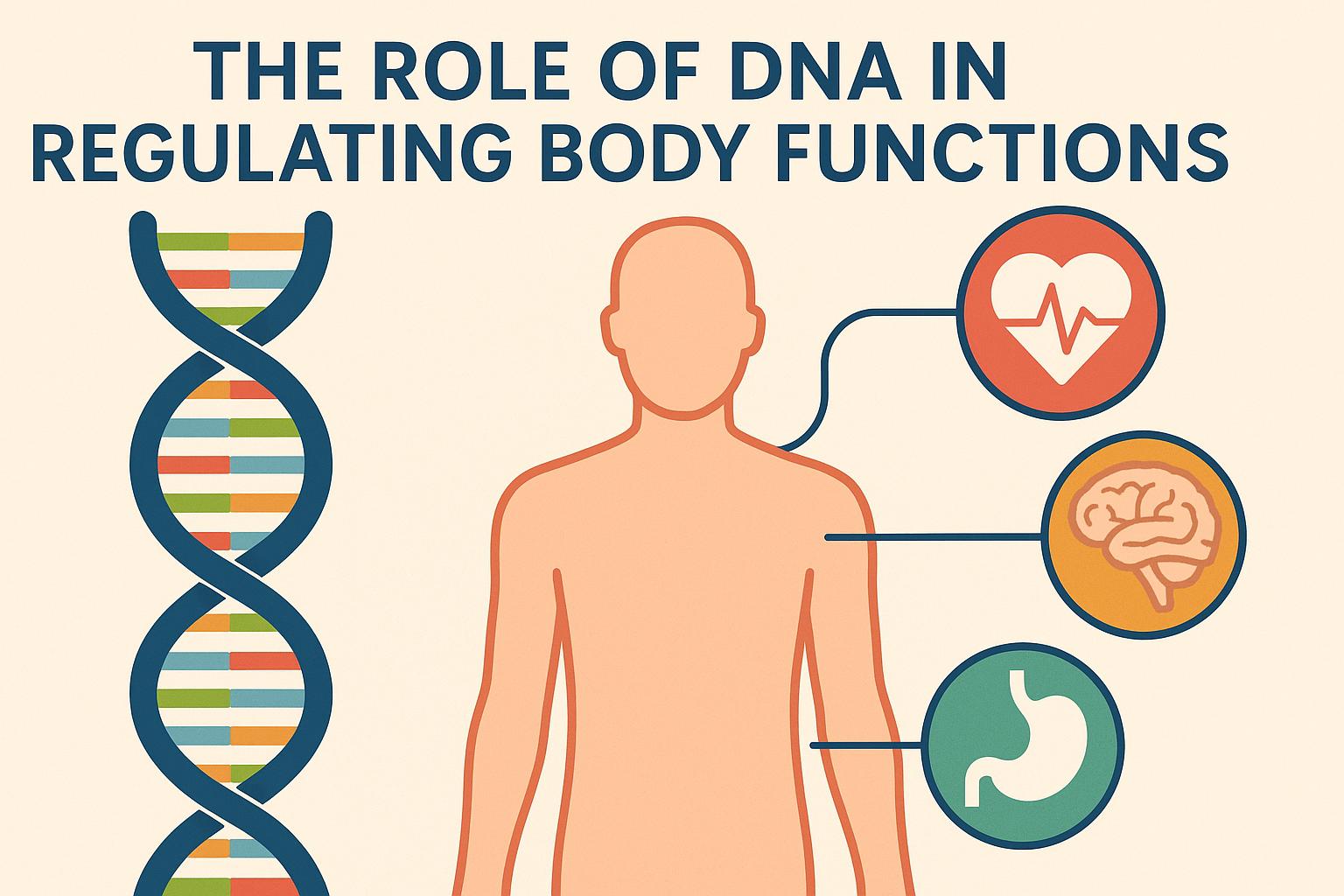
DNA, or deoxyribonucleic acid, is the hereditary material in humans and most other organisms. Nearly every cell in a person’s body contains the same DNA, highlighting its foundational presence throughout the living organism. The primary role of DNA lies in storing the critical instructions required for the construction and maintenance of an organism. By understanding DNA’s crucial role in regulating body functions, scientists and researchers gain insights into how our bodies grow, develop, and function at a molecular level.
Genetic Instructions and Protein Synthesis
At the core of DNA’s multifaceted functions is its pivotal role in encoding genetic instructions essential for the synthesis of proteins. Proteins are indispensable molecules that form the cornerstone of cellular activities, executing a wide array of tasks, from catalyzing vital biochemical reactions to offering structural support in various cell types. The journey of protein synthesis begins with the process of transcription, in which the DNA sequence of a gene undergoes a meticulous copying into messenger RNA, commonly known as mRNA. This mRNA then journeys from the cell nucleus into the cytoplasm. It is here that the process of translation takes place, facilitated by ribosomes that meticulously read the mRNA sequence and subsequently synthesize specific proteins. Thus, the process of protein synthesis exemplifies the manner in which DNA instructions are faithfully translated into functional molecules.
Regulation of Gene Expression
The orchestration of gene expression is a finely-tuned process that governs the temporal and quantitative production of proteins. Within this regulatory framework, various regulatory sequences within the DNA, including promoters and enhancers, play a pivotal role in modulating gene activity. These sequences engage in interactions with proteins known as transcription factors, which either bolster or curtail the production of mRNA. This intricate regulation endows cells with the remarkable ability to adapt to varying environmental conditions, ensuring that proteins are synthesized at the optimal time and in appropriate quantities. The regulation of gene expression is thus a critical determinant of cellular function and organismal adaptability.
Epigenetic Modifications
Epigenetic modifications stand as an additional layer of control over gene expression, achieving modulation without altering the DNA sequence itself. These modifications encompass DNA methylation and histone modification, both of which exert influence over how compactly DNA is wound and the accessibility of specific genes for transcription. Through these modifications, organisms are equipped to respond dynamically to environmental cues and changes, shaping patterns of development and even exerting influence over the susceptibility to certain diseases. The study of epigenetic modifications thus holds potential implications for understanding complex biological processes and disease mechanisms.
Repair and Replication of DNA
The preservation of DNA integrity and the replication of DNA are fundamental processes that contribute to maintaining stable cellular function. DNA repair mechanisms operate ceaselessly to monitor and rectify damage inflicted by environmental factors such as UV radiation and chemical exposure. In the context of cell division, DNA replication ensures that each newly formed cell inherits an exact replica of the DNA. This meticulous process involves precise coordination and a sequence of enzymatic reactions. Yet, it is not immune to anomalies; errors in replication or repair can precipitate the emergence of mutations, potentially culminating in genetic disorders or contributing to the development of cancers. Thus, the robustness of DNA repair and replication is paramount to cellular health and organismal survival.
The Influence of DNA on Cellular Differentiation
Cellular differentiation represents a transformative process through which a less specialized cell assumes a more specialized form and function. This intricate process, driven by specific genetic instructions encoded within the DNA, is vital during embryonic development. It is through differentiation that cells acquire the capacity to evolve into tissues and organs endowed with diverse and specialized functions. A profound understanding of the molecular mechanisms guiding differentiation offers substantial insights into regenerative medicine and therapies tailored for a range of diseases. Therefore, unraveling the impact of DNA on cellular differentiation remains a focus of intense research.
Conclusion
The multifaceted and dynamic roles of DNA in regulating body functions underscore the inherent complexity of biological systems. Through processes such as protein synthesis, gene expression regulation, and cellular differentiation, DNA orchestrates the harmonious and coordinated operation of the human body. The continuous exploration of DNA and its intricate regulatory mechanisms offers not only the promise of advanced medical treatments but also facilitates a deeper comprehension of human biology and its intricacies.
To delve further into related topics and gain greater insights, consider consulting scientific journals and publications that explore the intricacies of DNA and its varied functions.