Understanding DNA Recombination
DNA recombination is a pivotal biological process that enables genetic diversity among organisms. This intricate process occurs naturally in organisms, fostering variation through the rearrangement of genetic material. It plays a crucial role in evolution, allowing organisms to adapt to new environments by introducing genetic variability. DNA recombination also has significant applications in biotechnology, helping scientists to manipulate genetic sequences for various purposes.
The Basics of DNA Recombination
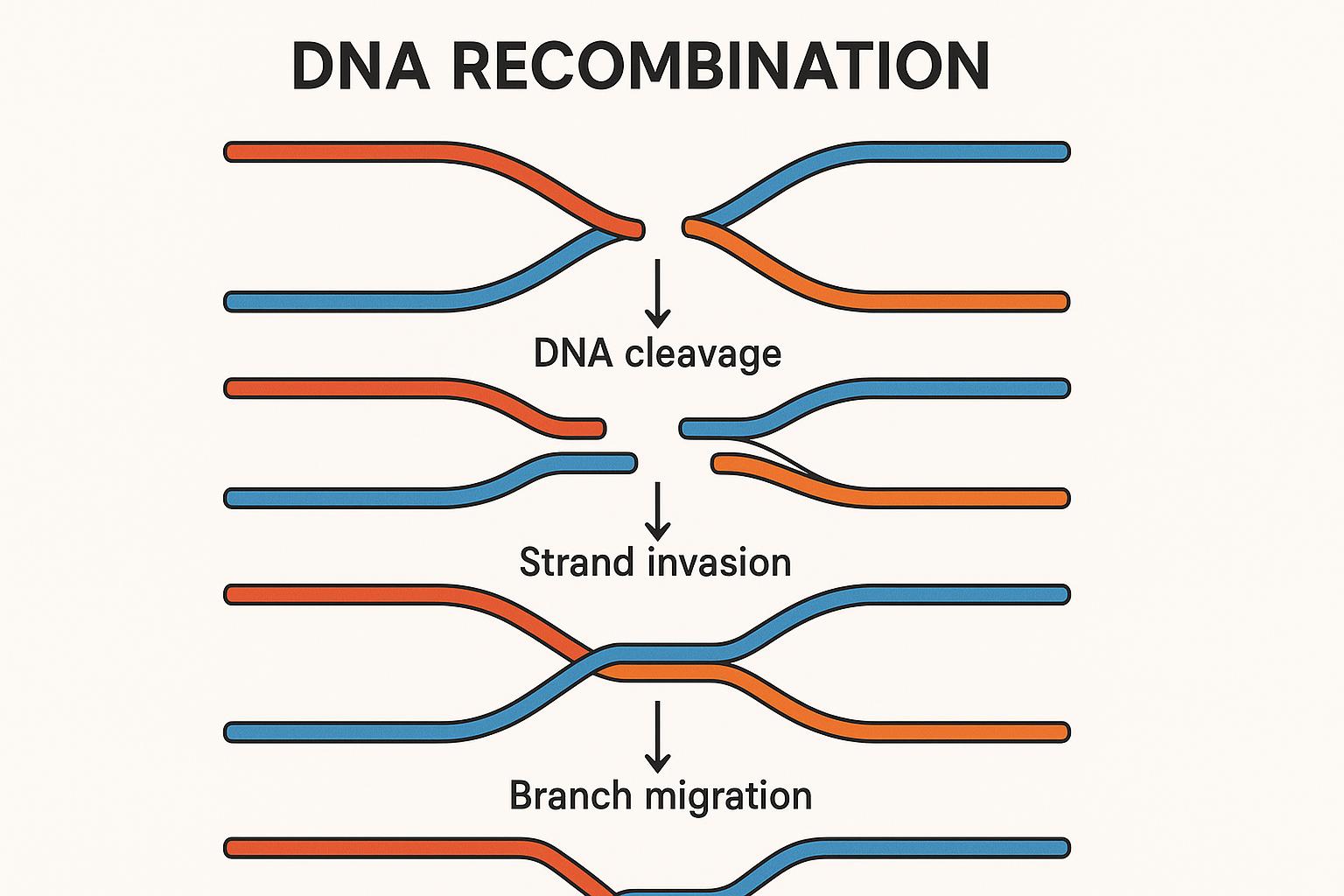
At its core, DNA recombination involves the exchange of genetic material between two DNA molecules to form new combinations of alleles. This process can occur through multiple mechanisms, each contributing to genetic diversity in distinct ways. One primary mechanism is homologous recombination, where nucleotide sequences are exchanged between two similar or identical DNA strands. In contrast, non-homologous recombination involves the joining of DNA sequences with limited or no similarity.
Mechanisms of DNA Recombination
Within the field of genetics, homologous recombination is well studied and vital to meiosis, the cell division process that leads to the formation of gametes, such as sperm and eggs. During meiosis, homologous chromosomes pair up and may exchange segments of their genetic material in a process called crossing over. This exchange ensures that offspring inherit a mix of genes from both parents, contributing to genetic variation.
Non-homologous recombination, on the other hand, occurs when DNA fragments join without using homologous sequences as templates. This mechanism is mainly involved in repairing double-strand breaks in DNA that can occur due to environmental factors or physical damage.
The Role of Enzymes in DNA Recombination
The DNA recombination process is facilitated by various enzymes, each playing a crucial role in ensuring accurate and efficient recombination events. Enzymes such as RecA in bacteria and its counterpart Rad51 in eukaryotes are essential to homologous recombination. These enzymes are responsible for aligning DNA strands and promoting the strand exchange process that is crucial for recombination. By orchestrating these molecular interactions, they help maintain the integrity of the genetic material while allowing for genetic diversity.
In non-homologous recombination, the enzyme DNA ligase IV plays a pivotal role. Its main function is to join broken DNA strands, facilitating the repair of double-strand breaks. This process is particularly important in the context of DNA damage repair mechanisms, which are vital for cellular survival in response to environmental insults that cause DNA damage.
Applications of DNA Recombination
The applications of DNA recombination in biotechnology are vast and transformative. Recombinant DNA technology, a groundbreaking area of genetic research, involves artificially creating novel genetic combinations by inserting DNA sequences from one organism into another’s genome. This method enables researchers to harness the beneficial properties of genes from various organisms, leading to innovations across multiple sectors.
In agriculture, DNA recombination techniques have been employed to create genetically modified crops with desirable traits such as increased resistance to pests, diseases, or harsh environmental conditions. These advancements have the potential to enhance food security and improve agricultural productivity by minimizing reliance on chemical pesticides and optimizing crop yield.
Similarly, in the field of medicine, recombinant DNA technology has been instrumental in the development of new therapeutic proteins. Proteins that were once challenging to produce in large quantities, such as human insulin, are now synthesized in bacteria or yeast through recombinant techniques. These advancements have revolutionized treatments for various diseases, providing more effective and affordable therapeutic options for patients.
Additionally, DNA recombination is being explored in environmental science for bioremediation purposes. Microorganisms can be genetically engineered to break down pollutants and restore polluted environments, showcasing the potential of DNA recombination to address urgent ecological challenges.
Further Insights into DNA Recombination
Understanding the complexities of DNA recombination extends beyond its biological significance to opening new frontiers in research and application. Continued investigations into the molecular mechanisms underlying recombination can reveal insights into genetic diseases and the development of new therapeutic approaches. As researchers delve deeper into these processes, the potential for innovative solutions in genetics and molecular biology continues to grow.
The Impact of DNA Recombination Research
The pursuit of knowledge regarding DNA recombination not only enhances our understanding of genetic variation but also prompts the development of novel biotechnological applications. As scientists uncover the intricacies of this process, it spurs the creation of new molecular tools that can be utilized in diverse fields ranging from healthcare to agriculture.
Exploring how DNA recombination contributes to genomic stability and evolution can inform conservation efforts, providing insights into how species adapt to changing environments and contribute to biodiversity. Furthermore, understanding these mechanisms at a molecular level can also aid in the identification and treatment of genetic disorders, enhancing the quality of life for individuals affected by these conditions.
The Future of DNA Recombination Studies
Advances in DNA recombination research continue to hold promise for wide-ranging scientific and practical applications. With the evolution of genome editing technologies, such as CRISPR-Cas systems, the ability to precisely manipulate genetic sequences has been dramatically enhanced. These tools build on the fundamental principles of DNA recombination to provide unprecedented control over genetic information, opening the door to targeted gene therapy, personalized medicine, and advanced agricultural practices.
Furthermore, as interdisciplinary collaborations grow, the integration of computational biology with advances in DNA recombination research will allow for the development of predictive models. Such models could forecast the outcomes of genetic manipulations, improving the efficiency and success rates of genetic engineering endeavors.
In conclusion, the study of DNA recombination remains a dynamic and rapidly evolving field, with profound implications for science and society. As researchers continue to explore its mechanisms and applications, the potential for innovative solutions and enhancements in a variety of domains—ranging from healthcare to environmental sustainability—seems boundless.