
Understanding DNA Microarrays
The science of DNA microarrays is a pivotal advancement in genomics, enabling researchers to analyze gene expression patterns on a global scale. DNA microarrays, sometimes called gene chips, allow scientists to investigate thousands of genes simultaneously. This powerful technology has broad applications in various fields such as gene discovery, disease diagnosis, and drug development.
The Basics of DNA Microarrays
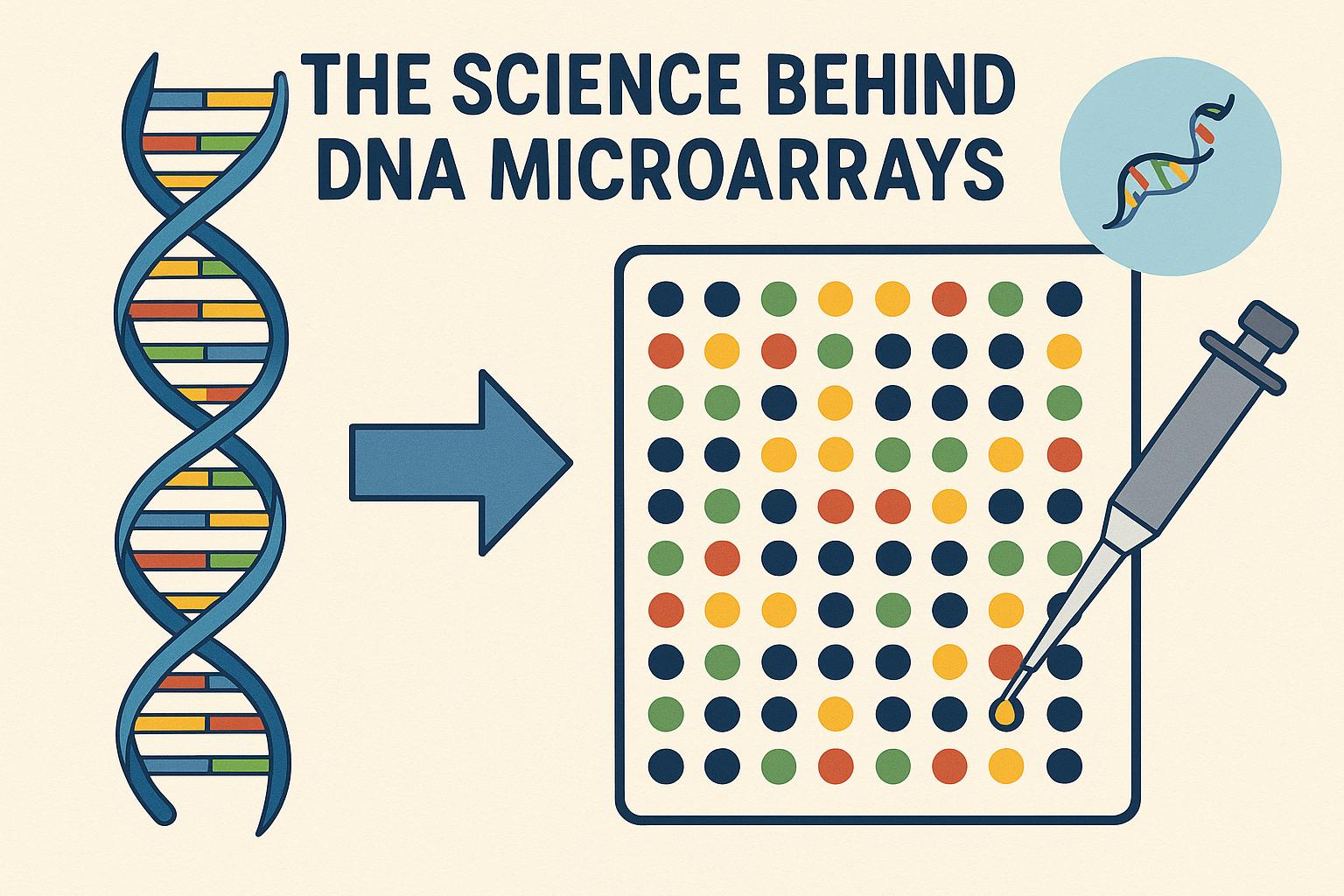
At its core, a DNA microarray is a collection of microscopic DNA spots attached to a solid surface, usually glass or silicon. Each spot on the array represents a specific DNA sequence, and the entire setup is designed to measure the expression levels of thousands of genes at once. The process begins with the extraction of mRNA from a sample, which is then reverse-transcribed into complementary DNA (cDNA). The cDNA is labeled with a fluorescent dye and hybridized to the microarray.
The Process of Hybridization
Hybridization is a critical step where the labeled cDNA samples are allowed to bind to their complementary DNA sequences on the microarray. If a particular gene is active, its corresponding mRNA, and in turn, the cDNA, will be present in large amounts. This binding results in a fluorescent signal, which is usually detected and quantified using specialized scanning equipment.
Data Analysis and Interpretation
Once hybridization is complete, the microarray undergoes scanning to measure the intensity of fluorescence, providing a snapshot of gene expression across the genome. The resulting data needs to be carefully analyzed using statistical methods to distinguish meaningful patterns. This analysis helps identify genes that are upregulated or downregulated in response to specific conditions.
Applications of DNA Microarrays
DNA microarrays are a valuable tool in numerous research areas. In cancer research, they help in identifying expression profiles that can predict tumor classification and patient prognosis. Pharmaceutical companies employ microarrays to understand the molecular basis of diseases and to identify potential drug targets. Moreover, microarrays have applications in personalized medicine, where they assist in tailoring treatments based on individual genetic profiles.
Challenges and Future Prospects
Despite their transformative impact, DNA microarrays face challenges such as the need for extensive validation and issues with sensitivity and specificity. However, their continued evolution promises to enhance their utility and accuracy. With advances in parallel technologies like next-generation sequencing (NGS), the integration of DNA microarrays remains a dynamic area of study in molecular biology.
The Role of DNA Microarrays in Research
Researchers across various disciplines leverage DNA microarrays to decipher genetic information on a large scale. By analyzing the expression profiles of multiple genes simultaneously, scientists can uncover the genetic underpinnings of complex biological processes. This technology provides critical insights into the interactions and regulations that contribute to phenotypic traits in organisms.
Gene Discovery and Functional Analysis
DNA microarrays play an essential role in gene discovery efforts, helping researchers identify new genes associated with specific biological functions or conditions. By comparing gene expression profiles under different environmental or experimental conditions, scientists can infer the potential functions of previously unknown genes. This may lead to the identification of new pathways or mechanisms important in health and disease.
Diagnostic and Prognostic Applications
The diagnostic potential of DNA microarrays lies in their ability to detect disease-associated gene expression patterns. For instance, in oncology, specific gene signatures identified through microarrays can serve as biomarkers for diagnosing cancer subtypes, predicting disease progression, or monitoring treatment response. This diagnostic capability is crucial for enabling early detection and improving patient outcomes.
Furthermore, the insights gained through DNA microarrays are not just limited to diagnostics; they extend to prognosis as well. By analyzing gene expression profiles, researchers can develop prognostic models that predict how a patient may respond to treatment or how aggressive a disease may progress. This forms the foundation for personalized medicine approaches, where treatments are tailored based on individual genetic makeup.
Pharmacogenomics and Drug Development
In the realm of pharmacogenomics, DNA microarrays serve as a tool to understand how genetic variations influence drug response. Pharmaceutical companies utilize this technology to identify potential drug targets by examining gene expression changes upon exposure to drug compounds. This not only streamlines the drug discovery process but also aids in elucidating drug mechanisms of action and potential side effects.
The development of targeted therapies, especially for complex diseases like cancer, benefits significantly from insights garnered through microarrays. By identifying specific gene expressions that correlate with disease phenotypes, researchers can develop therapeutic strategies aimed at modulating these gene activities.
Environmental and Agricultural Applications
Beyond medical applications, DNA microarrays find roles in environmental and agricultural research. Scientists use gene expression analysis to study how plants respond to stressors such as drought, pests, or pathogens. Understanding these responses aids in developing crops with improved resilience and productivity. Similarly, in environmental sciences, microarrays help monitor ecosystem changes or detect pollutants’ impact on living organisms.
Technological Advancements and Integration
As with any technology, DNA microarrays have evolved since their inception, with continuous improvements enhancing their accuracy, sensitivity, and usability. The integration of complementary technologies, such as next-generation sequencing (NGS), provides a comprehensive view of the transcriptome by validating and expanding the microarray findings. These advancements facilitate more precise and robust data interpretation, thereby broadening the scope of research possibilities.
Further, the development of high-density microarrays allows for the analysis of an even greater number of genes, providing a more detailed understanding of complex genomic landscapes. Combined with innovations in bioinformatics, these advancements ensure that researchers can efficiently handle the vast quantities of data generated and distill meaningful biological insights.
Future Prospects
Looking ahead, the potential applications and improvements in DNA microarrays suggest a promising future. As we continue to bridge the gap between genomics and clinical practice, this technology is poised to play a crucial role in advancing precision medicine. The ongoing reduction in cost and increase in accessibility of microarray-based tools will likely spur more widespread adoption across different sectors, fostering collaborative research endeavors.
In conclusion, DNA microarrays provide a powerful means to explore the complex world of gene expression, offering insights that drive innovation in research and healthcare. As methods and technologies improve, the potential of DNA microarrays will continue to expand, opening new frontiers in the understanding of genomics. These endeavors will not only enhance our grasp of genetics but also pave the way for practical applications that improve human health and quality of life.