Understanding DNA Changes During Cell Division
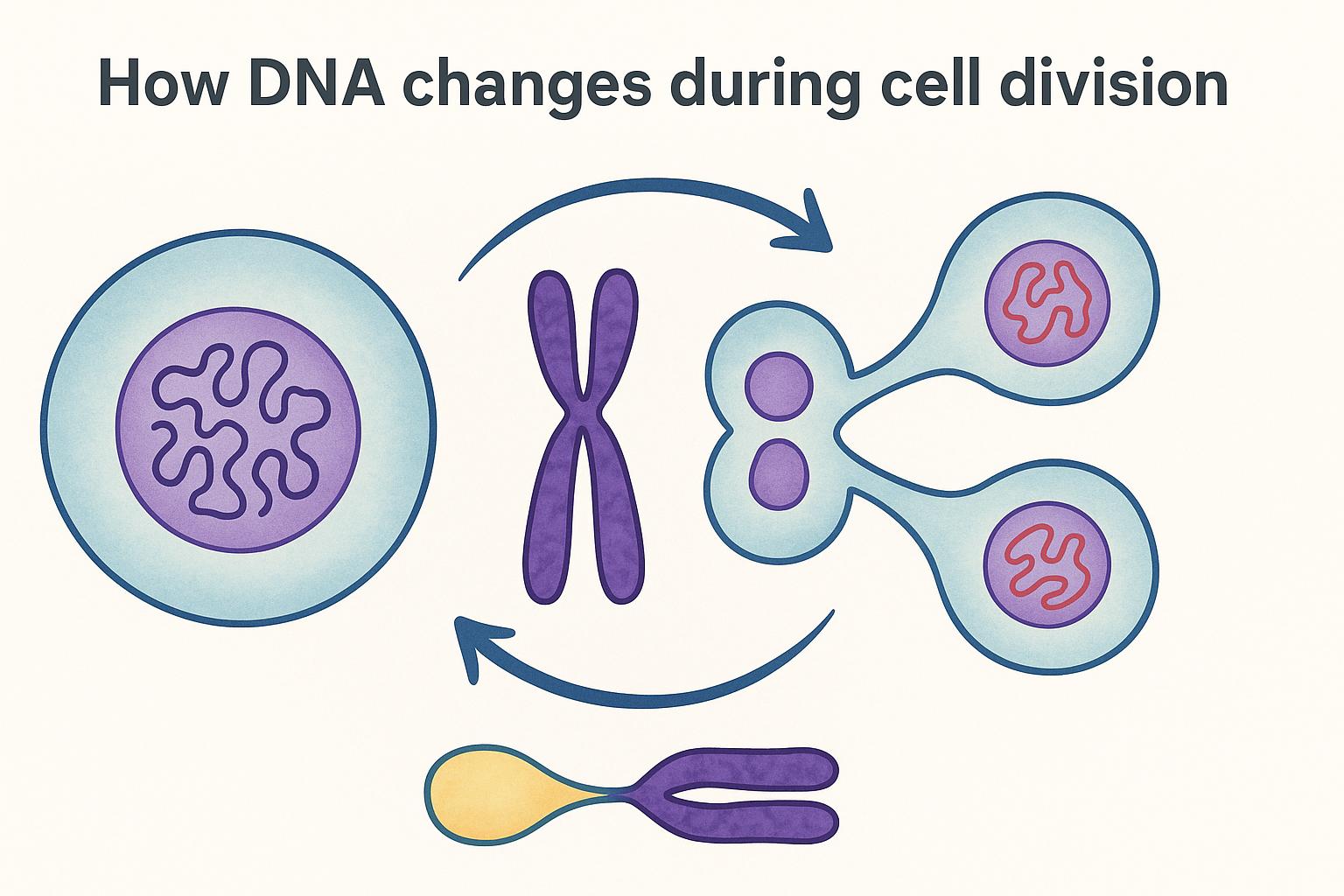
Cell division is a fundamental process crucial for the growth, development, and maintenance of biological systems in organisms. During cell division, DNA undergoes complex changes, ensuring accurate replication and distribution to daughter cells. This comprehensive analysis delves into the transformations that DNA undergoes, the mechanisms ensuring genetic integrity, and how these processes contribute to the structure and function of living beings.
The Cell Cycle and DNA Replication
The cell cycle is a series of stages a cell progresses through leading up to division. Central to the cycle is the duplication of a cell’s DNA, an essential step for ensuring that genetic information is accurately passed on to daughter cells. The cycle is divided into several phases, and the S-phase, or synthesis phase, is where DNA replication takes place. During the S-phase, the entire DNA content of a cell is replicated, maintaining fidelity to ensure each daughter cell receives an identical copy of the genetic material.
S-phase is marked by the unwinding of the double helix structure of DNA. Specialized proteins help unravel the helix, making each strand accessible for replication. This process involves reading the genetic code on the original or template strands and synthesizing new complementary strands, resulting in two identical replicas of DNA, each consisting of one original and one new strand. The replication of DNA is a highly orchestrated process, involving the coordination of several enzymatic activities and structural modifications.
The Role of DNA Polymerase
A central player in the synthesis of new DNA strands is the enzyme DNA polymerase. DNA polymerase attaches to the template strand and begins the process of assembling a new strand of DNA by adding nucleotides in sequence. Each nucleotide is incorporated in a manner complementary to the template strand, adhering strictly to base pairing rules. DNA polymerase ensures the high fidelity of DNA replication, although the complex nature of the process means that occasional errors, referred to as mutations, can occur.
The assurance of genetic stability, despite these errors, relies on additional cellular mechanisms. DNA polymerase itself has a proofreading function, capable of identifying and correcting mismatches as DNA is synthesized. However, when proofreading falls short, other mechanisms within the cell ensure that any replication errors do not compromise genetic integrity.
Errors and DNA Repair Mechanisms
Though infrequent, errors in DNA replication can be detrimental if allowed to persist in the genetic code. To mitigate these occurrences, cells have evolved advanced repair mechanisms aimed at correcting any discrepancies. One such system is the mismatch repair system, which identifies and repairs mismatches that escape detection during initial replication proofreading. Additional repair pathways, such as nucleotide excision repair and base excision repair, play critical roles in sustaining DNA integrity.
The nucleotide excision repair mechanism functions by excising damaged or erroneous sections of DNA and replacing them with the correct sequence. Similarly, base excision repair targets improper bases, removing and replacing them with the appropriate nucleotides. Through these sophisticated processes, cells effectively guard against the propagation of genetic errors that could lead to mutations and broader biological consequences.
Chromosomal Segregation
Following the replication of DNA, a cell progresses to the segregation of chromosomes during processes like mitosis and meiosis. This stage of cell division is characterized by the precise separation of replicated chromosomes into distinct daughter cells. The mitotic spindle, an apparatus comprising microtubules, facilitates this segregation by aligning and equitably distributing chromosomes.
Errors in this delicate process, such as improper attachment of chromosomes to the spindle, can result in aneuploidy, where cells may end up with an incorrect number of chromosomes. Aneuploidy is a condition associated with various diseases, including several forms of cancer. Hence, the precise orchestration of chromosomal segregation is integral to cellular and organismal health.
Conclusion
In summary, cell division encompasses a series of intricate modifications within DNA to ensure the accurate transmission of genetic information. These mechanisms provide insight into the ways organisms grow and adapt to genetic challenges, highlighting the complex processes that preserve life at its fundamental level. Understanding these intricate processes contributes to broader knowledge in biology, genetics, and medicine, illuminating the pathways through which life sustains itself from one generation to the next. The fidelity of DNA replication, the precision of repair systems, and the accuracy of chromosome segregation underpin the resilience and continuity of life across diverse biological landscapes.