The Fundamentals of DNA Hybridization
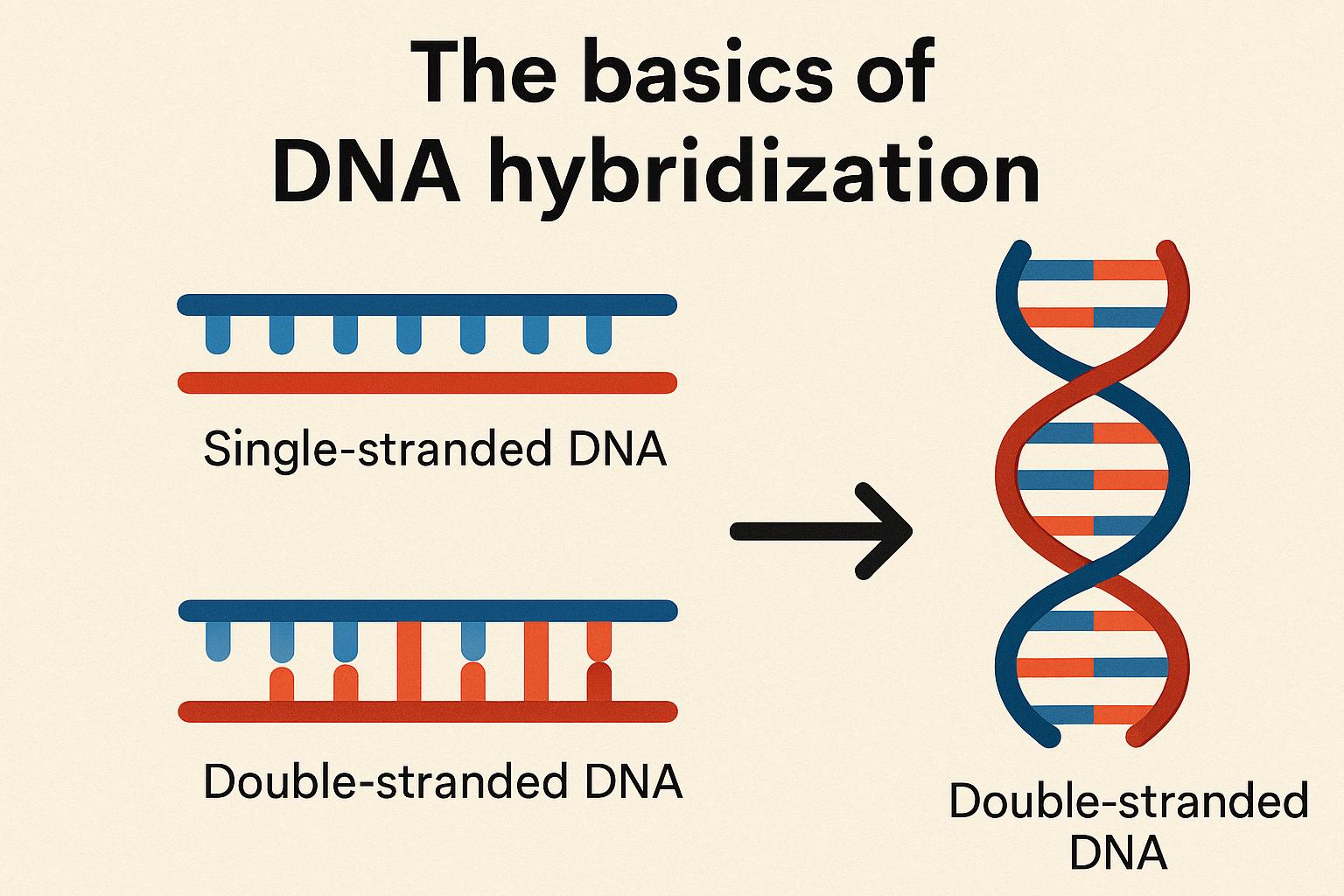
DNA hybridization is a crucial technique in the field of molecular biology, carrying immense significance across various scientific domains such as genetics and biotechnology. At its core, DNA hybridization involves the pairing of complementary nucleic acid strands to form a stable double helix. Through a deep understanding of DNA hybridization, we can unveil insights into numerous genetic processes and advanced scientific methods that rely on this fundamental mechanism.
Basic Principles
Deoxyribonucleic acid, commonly known as DNA, is comprised of two strands that twist around each other to form a double helix structure. Each of these strands is made up of nucleotide bases: adenine (A), thymine (T), cytosine (C), and guanine (G). The pairing of these bases is highly specific, where adenine pairs with thymine, and cytosine pairs with guanine. This specificity is key to the process of DNA hybridization, where two single-stranded DNA molecules bind through the annealing process based on complementary base pairing rules.
Melting Temperature
A crucial factor in DNA hybridization is the melting temperature, abbreviated as Tm. This temperature marks the point at which half of the DNA duplex dissociates into its constituent single strands. The melting temperature is influenced by a variety of elements:
- The length of the DNA strands: Longer DNA strands tend to have higher melting temperatures due to more hydrogen bonds holding them together.
- The nucleotide composition, particularly the G-C content: Guanine and cytosine form three hydrogen bonds as opposed to the two formed by adenine and thymine, thus a higher G-C content results in greater duplex stability and a higher Tm.
- The ionic strength of the solution: The presence of ions in solution can stabilize the negatively charged phosphate backbone of DNA, influencing the melting temperature.
As the G-C content increases, the DNA helix becomes more stable, thereby raising the melting temperature.
Applications in Science
DNA hybridization finds utilization in numerous scientific methods and applications. Some of the most notable include:
DNA Fingerprinting: This forensic technique is instrumental in criminal investigations, paternity testing, and determinations of genetic relationships. By analyzing DNA profiles, one can match genetic information between individuals, aiding in identity verification.
Microarrays: This technology is pivotal in the study of gene expression profiling, the detection of mutations, and the identification of specific genetic sequences. Microarrays utilize DNA hybridization to adhere target gene sequences to strategically positioned probes on a solid substrate.
Fluorescent In Situ Hybridization (FISH): FISH is a cytogenetic method that employs fluorescent probes to detect and localize specific DNA sequences within chromosomes, offering visual insights into the genetic landscape.
Factors Influencing Hybridization
Several factors influence the efficiency and specificity of DNA hybridization. One critical aspect is the stringency of the hybridization conditions. This encompasses parameters such as temperature, salt concentration, and the concentration of denaturing agents. High stringency conditions typically yield more specific binding by minimizing nonspecific interactions, thereby enhancing hybridization fidelity.
Moreover, the length and concentration of DNA strands also play a significant role. Shorter DNA sequences can hybridize at a faster rate; however, they are also prone to nonspecific binding, leading to potential inaccuracies in observed outcomes. Thus, tuning the balance between speed and specificity is essential for accurate hybridization.
Conclusion
The process of DNA hybridization lies at the heart of many molecular biology techniques, forming the fundamental basis of several critical scientific applications. Grasping the principles of base pairing, understanding the factors that modulate hybridization efficiency, and recognizing the broad applications of these principles are indispensable for anyone engaged in genetic research. For further exploration of the topic, more comprehensive knowledge and resources can be accessed through specialized scientific journals or by engaging with genetic research institutions. Through continued study and research, DNA hybridization will undoubtedly contribute to advancements in genetic sciences, with implications spanning diverse scientific realms.