The Role of DNA in Species Adaptation
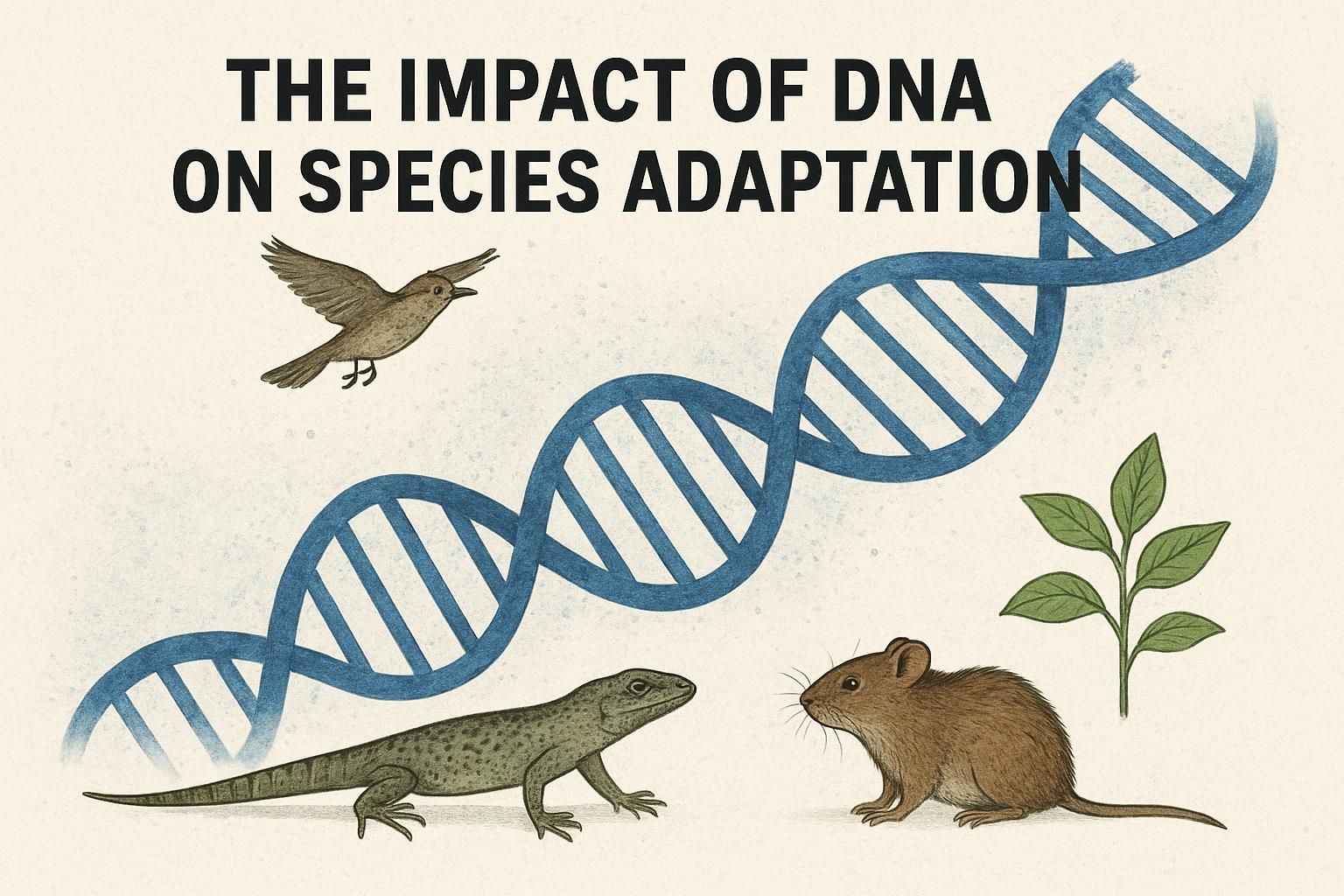
DNA, or deoxyribonucleic acid, is the hereditary material responsible for the vast diversity of life forms on Earth. Acting as a comprehensive blueprint, it dictates the biological processes essential for living organisms to function, develop, and reproduce. Understanding DNA’s role in species adaptation is critical to appreciating how life thrives amid ever-changing environmental conditions. This process of adaptation allows species to survive and propagate by equipping them with traits that confer advantages within their specific ecological niches.
Genetic Variation
A cornerstone of species adaptation is the presence of genetic variation within populations. This variation arises naturally, driven by mechanisms such as mutation, recombination, and gene flow. These genetic differences among individuals serve as the foundation upon which natural selection operates. When the environment changes, certain traits may become more favorable, allowing individuals possessing these traits to survive and reproduce more successfully. This, in turn, leads to a gradual increase in the frequency of advantageous traits over generations.
Genetic variation ensures that populations possess a diverse array of traits. Such diversity is crucial, as it enables populations to be resilient in the face of new challenges. Without genetic variation, species would have fewer tools at their disposal to cope with threats such as disease or climate change. Thus, maintaining genetic diversity is vital for the health and adaptability of ecosystems.
Mutation and Adaptation
Mutations are fundamental to creating genetic variation. Defined as changes in the DNA sequence, mutations can occur spontaneously or be induced by external factors such as radiation or chemicals. Although many mutations may be neutral or even harmful, some can confer significant advantages to organisms in specific environments. The classic case of the peppered moth during the Industrial Revolution in England exemplifies this concept. The darker-colored moths, resulting from a genetic mutation, were less conspicuous against soot-stained trees than their lighter counterparts, leading to a shift in the population’s coloration over time due to selective predation.
This process illustrates how mutations, when advantageous, can become fixed in a population. Mutations thereby contribute to the ever-evolving tapestry of life by introducing new traits that may facilitate adaptation to changing environmental conditions. These genetic changes, although small at times, can lead to significant evolutionary modifications given enough time and selective pressure.
Natural Selection
Central to the theory of evolution, natural selection is the mechanism by which advantageous traits increase in frequency within a population. Traits that improve an organism’s chances of survival and reproduction are more likely to be passed on to future generations. Within a DNA context, natural selection favors the transmission of genes encoding beneficial traits. This results in a population that gradually adapts to its environment.
Natural selection can induce changes rapidly when environmental pressures are strong, such as the development of antibiotic resistance in bacteria. However, it can also exert effects over much longer timescales, shaping species across many generations. The continuous interplay between genetic variation and natural selection is what drives the evolution of species, refining their adaptations to better suit their ecological realities.
Epigenetics and Environmental Influence
While genetics provides the structural basis for inheritance, research in the field of epigenetics has revealed a new layer of complexity in how traits are expressed and regulated. Epigenetics studies how gene activity can be altered by external or environmental factors without changes to the underlying DNA sequence itself. These factors can include diet, exposure to toxins, stress levels, and climate conditions.
Epigenetic changes can enable rapid responses to environmental shifts, allowing organisms to adjust their physiological processes. For example, a change in food availability can trigger epigenetic modifications that alter metabolic pathways in certain species, enhancing their ability to survive. These modifications can sometimes be passed on to subsequent generations, offering a mechanism for rapid adaptation that complements the slower process of genetic change.
Environmental conditions thus play a pivotal role in shaping the adaptive landscape of species. By influencing which genes are expressed and how, the environment can drive the emergence of phenotypes that are better suited to new or altered habitats. Understanding this dynamic is crucial for predicting how species might respond to future environmental changes, such as those posed by global climate change.
Overall, the significance of DNA in species adaptation cannot be overstated. It provides the blueprint that encodes the potential for diversity within populations, enabling natural selection to act as a sculptor of evolutionary change. Through processes of mutation and genetic recombination, new traits are introduced, giving rise to the vast array of life forms we observe today. Coupled with the insights from epigenetics, it becomes clear that the adaptability of organisms is a complex interplay between their genetic makeup and environmental influences. This intricate balance ensures that life can persist, adapt, and flourish even in the face of a rapidly changing world.
For those interested in a deeper dive into these topics, scientific publications and resources from academic institutions offer valuable insights into the mechanisms of biological adaptation and the ongoing research efforts to unravel the complexities of life at the genetic level.