Understanding the Basics of CRISPR-Cas9
CRISPR-Cas9 stands as a groundbreaking tool in the field of genetic engineering and biotechnology. It allows for precise alterations of DNA within living organisms, which holds promise for treating genetic disorders, enhancing agricultural crops, and much more.
The CRISPR-Cas9 System
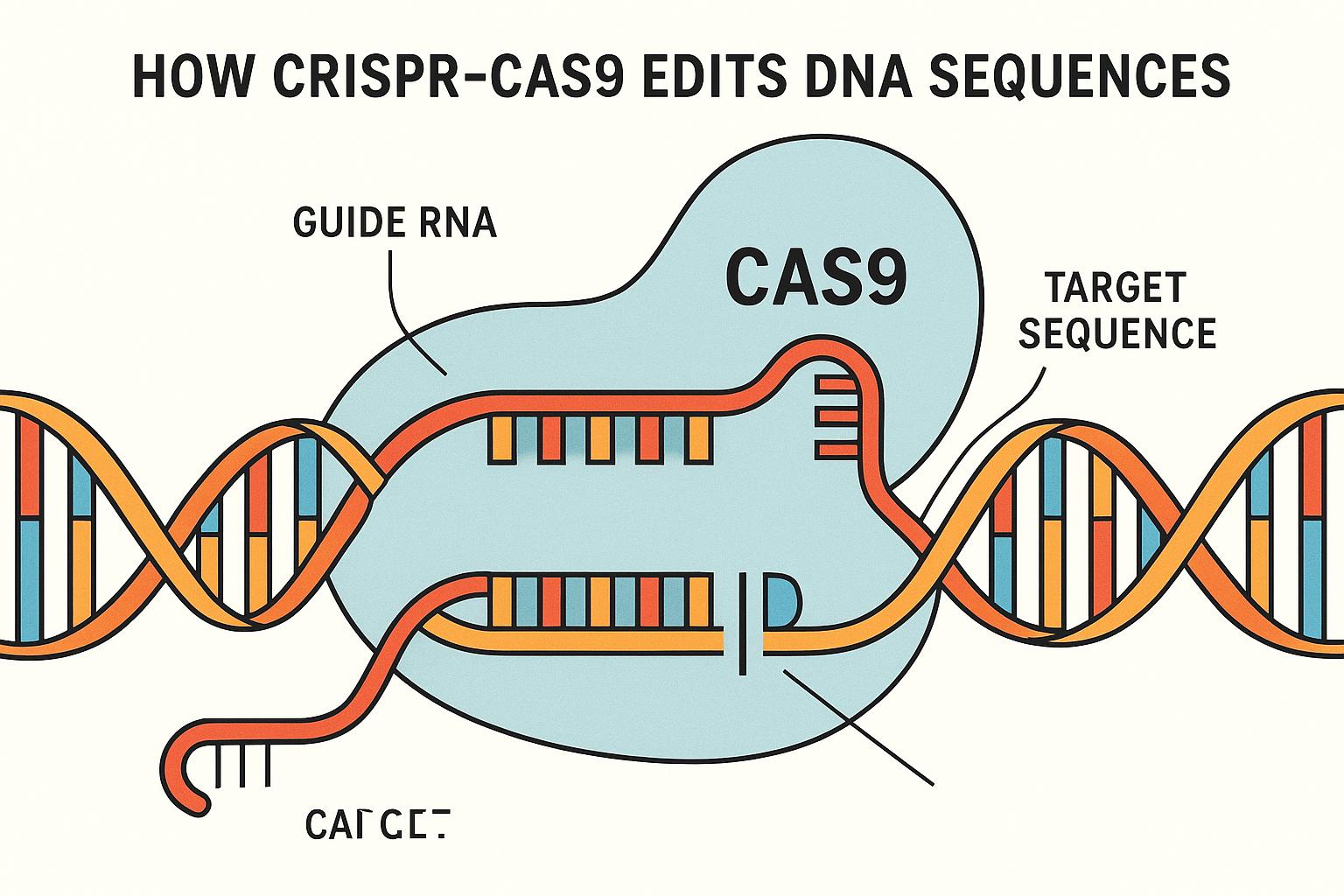
The CRISPR-Cas9 system originates from a mechanism found in bacteria, wherein it serves as a form of immune defense. The acronym CRISPR stands for Clustered Regularly Interspaced Short Palindromic Repeats. These are sequences in bacterial genomes that help recognize and cut foreign genetic elements, like those from viruses. Cas9 is a protein that plays the role of molecular scissors within this system.
Guide RNA and Targeting DNA
To edit a specific DNA sequence, the CRISPR-Cas9 system relies on a piece of RNA known as guide RNA (gRNA). This guide RNA is designed to be complementary to the desired target DNA sequence. When introduced into a cell, the gRNA binds to its matching sequence on the DNA, directing the Cas9 protein to this exact location.
Making Precise Cuts
Once the gRNA guides the Cas9 protein to the correct DNA site, Cas9 cuts the DNA’s double helix. This precise cut is essential for introducing specific changes, such as inserting a new gene or disabling a faulty one.
Repairing the DNA
After Cas9 cuts the DNA, the cell activates its repair mechanisms. This is where the actual editing occurs. There are two main types of repair processes:
- Non-Homologous End Joining (NHEJ): Here, the cell rejoins the broken DNA ends, which can lead to the addition or loss of a few nucleotides, effectively disrupting a gene.
- Homology-Directed Repair (HDR): This process allows for the insertion of new DNA sequences if a DNA template is provided, making it ideal for precise modifications.
Applications of CRISPR-Cas9
This cutting-edge technology has opened up vast possibilities across multiple domains. In medicine, CRISPR-Cas9 is being researched for treating genetic disorders such as cystic fibrosis and sickle cell anemia. In agriculture, it holds potential for creating crops with enhanced traits, like drought resistance or improved nutritional value.
Extending the Reach of CRISPR-Cas9 Across Various Fields
One of the remarkable aspects of CRISPR-Cas9 is its versatility. Beyond medicine and agriculture, it finds application in areas like environmental science and industrial biotechnology. In environmental science, for instance, CRISPR is used to study and possibly control invasive species or help endangered species adapt to changing climates. Such applications highlight its potential to create positive ecological impacts when used responsibly. In industrial biotechnology, CRISPR is being utilized to enhance microbial strains for more efficient production of biofuels and bioproducts, signifying its role in advancing sustainable industrial practices.
Challenges and Ethical Considerations
Despite its potential, the use of CRISPR-Cas9 is not devoid of challenges. Off-target effects, where unintended parts of the genome are edited, remain a significant concern. Moreover, the technical challenge of delivering the CRISPR components efficiently into many types of cells is a barrier for some potential applications. This ongoing challenge underscores the importance of fine-tuning the CRISPR-Cas9 tools for greater specificity and efficiency.
Ethical Implications and Global Perspectives
The ethical implications of editing human embryos or potential ecological impacts of altering crops underline the need for cautious and responsible use of this technology. Issues concerning equity and access to CRISPR technology continue to be at the forefront of global discussions, especially regarding potential socio-economic impacts on small-scale farmers when genetically modified crops are introduced. Furthermore, international regulatory environments differ significantly, which influences how CRISPR technology is implemented and governed. Harmonizing these regulations while ensuring that research and applications uphold ethical standards is a continual process that requires international collaboration and dialogue.
Collaborative Efforts in Advancing CRISPR Applications
Research institutions across the globe are actively contributing to the growth of CRISPR applications. Collaborative efforts also include partnerships between public institutions, private enterprises, and governments, which facilitate large-scale projects and studies. These collaborations are crucial not just for the technical advancement of CRISPR technology, but also in addressing the broad societal and ethical questions that come with its use. By sharing resources, data, and findings, these partnerships emphasize the collective effort to harness CRISPR’s potential in a manner beneficial for societal good.
For further insights, readers can explore more in-depth resources available through various scientific research organizations and institutions actively working on genetic engineering advancements.