Understanding the Role of DNA in Genetically Modified Organisms (GMOs)
Genetically Modified Organisms (GMOs) have become a focal point in discussions about modern science and its applications across agriculture, medicine, and biotechnology. This area of science, at its core, involves the manipulation of DNA to achieve desired traits that are beneficial to humans or the environment. In this context, DNA serves as the fundamental blueprint that dictates the characteristics and functions of living organisms. The process of creating GMOs is complex, involving several intricate steps that collectively allow for the introduction of new or altered genetic material.
The Science Behind GMOs
The creation of GMOs is fundamentally rooted in the principles of genetics and biotechnology. DNA, or deoxyribonucleic acid, is essential in this process as it carries the genetic instructions required for the development, functioning, growth, and reproduction of all living organisms. By modifying specific sequences within an organism’s DNA, scientists can impart new characteristics or enhance existing ones, thereby enabling the organism to acquire beneficial properties.
Gene Identification and Isolation
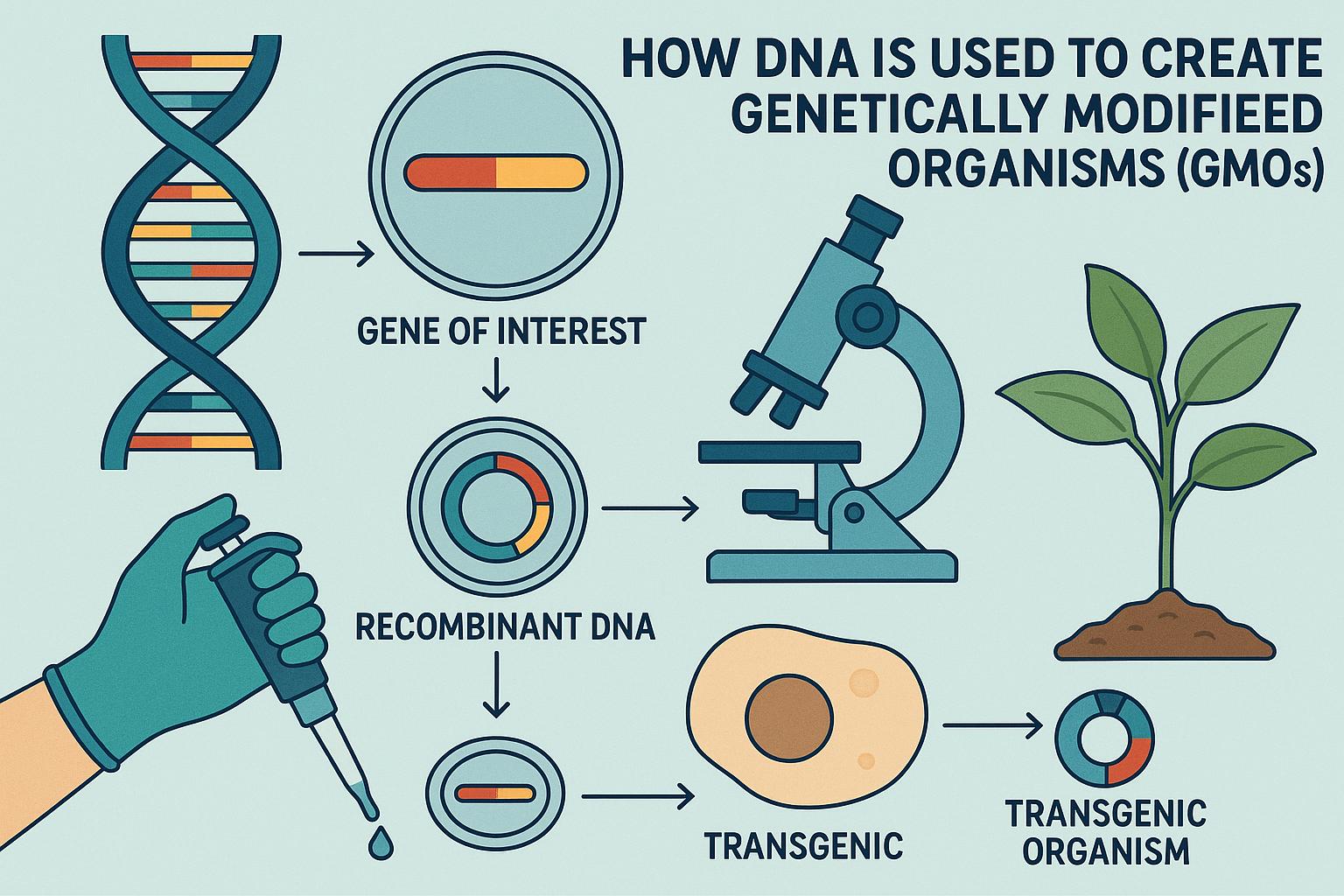
A critical initial step in the generation of GMOs is the identification of the gene that encodes the desired trait. This process involves thoroughly understanding which genetic sequences are responsible for specific characteristics. Modern technologies such as gene mapping and sequencing are indispensable tools in this phase, allowing scientists to pinpoint and analyze genes of interest with high precision. After identification, the gene must be isolated from the donor organism. This isolation is accomplished through the use of specialized enzymes that can precisely cut DNA at designated sequences, enabling the extraction of the target gene. This precise extraction is crucial to ensure that only the desired gene is transferred to the host organism.
Insertion and Expression
With the gene of interest identified and isolated, the next crucial step involves transferring it into the host organism’s genetic framework. To achieve this, scientists use vectors, such as plasmids and viral carriers, which are adept at transporting genetic material into cells. However, the mere addition of the gene into the host’s DNA is not sufficient; the gene must also be correctly expressed to be effective. To facilitate the expression, promoter sequences are often appended to the gene. These sequences function as molecular on-switches that enable the host organism’s cellular machinery to recognize and transcribe the inserted gene, ensuring it functions as intended within the new environment.
Regeneration and Selection
Upon successful insertion and expression of the desired gene, the next step is the regeneration of cells that have integrated the new genetic material, allowing them to develop into whole organisms. This process typically involves cultivating the modified cells on nutrient-rich media that support growth and development. To verify the success of genetic modification, selective markers are employed. These markers might endow the modified organisms with resistance to a certain antibiotic or herbicide, thereby permitting only those with the incorporated desired traits to survive and propagate, effectively filtering out unmodified cells.
Applications of GMOs
The development and use of GMOs have far-reaching applications across diverse fields. In agriculture, genetically engineered crops are designed to exhibit enhanced resistance to pests and diseases, endure unfavorable environmental conditions, and improve nutritional content, contributing to increased food security. In medicine, GMOs play a pivotal role in advancing gene therapy techniques, facilitating the treatment of genetic disorders, and enabling the production of complex pharmaceuticals. Furthermore, in environmental science, GMOs are being harnessed to create organisms capable of degrading pollutants, offering potential solutions for mitigating environmental pollution.
Ethical and Safety Considerations
While the prospects of GMOs are promising, they also raise significant ethical and safety concerns. The deliberate introduction of modified organisms into natural ecosystems could lead to unforeseen ecological consequences, potentially disrupting existing balances. Additionally, the long-term health impacts of consuming GMO products are subject to rigorous scrutiny. Consequently, robust regulatory frameworks have been established globally to evaluate and monitor the safety and impact of GMOs. These frameworks ensure that any GMO released into the environment or approved for consumption meets stringent safety standards and addresses potential risks.
Conclusion
The manipulation of DNA to create genetically modified organisms highlights the incredible potential of genetic science to address some of the world’s most pressing challenges. By altering the building blocks of life, scientists have unlocked opportunities for innovation in food production, medicine, and environmental protection. However, as we harness the power of this technology, it is crucial to approach its application with thoughtful consideration of its broader implications. For those interested in delving deeper into the complexities and future avenues of GMOs, resources from institutions like the FDA and the World Health Organization offer valuable insights and guidelines on the ongoing developments in this dynamic field.