Introduction to DNA as a Storage Medium
Deoxyribonucleic acid (DNA) has long been recognized as the blueprint of life, containing the genetic instructions necessary for the development and functioning of living organisms. However, beyond its pivotal biological role, DNA’s exceptional structure and properties have caught the attention of researchers and technologists seeking innovative ways to store digital data. The exploration of DNA as a medium for data storage is driven by its inherent characteristics: its impressive data density, durability, and long-term sustainability, qualities that far exceed conventional data storage solutions.
Why DNA for Data Storage?
A primary reason for considering DNA as a storage solution is its remarkable data density. DNA can store enormous amounts of information within a compact physical space, a characteristic unrivaled by current digital storage technologies. Research suggests that a mere gram of DNA has the potential to hold an astounding 215 petabytes (215 million gigabytes) of data. This level of data density represents a paradigm shift in storage solutions, offering an alternative that dramatically surpasses the capacity limits of traditional electronic storage devices such as hard drives and flash drives.
In addition to its density, DNA’s durability reinforces its desirability as a storage medium. DNA is an exceptionally stable molecule, with the ability to remain intact for thousands of years, provided it is stored under optimal conditions. This longevity is crucial for applications requiring secure, long-term data preservation, as it ensures that information can be archived not only densely but also reliably over extended periods.
The Process of Encoding Data into DNA
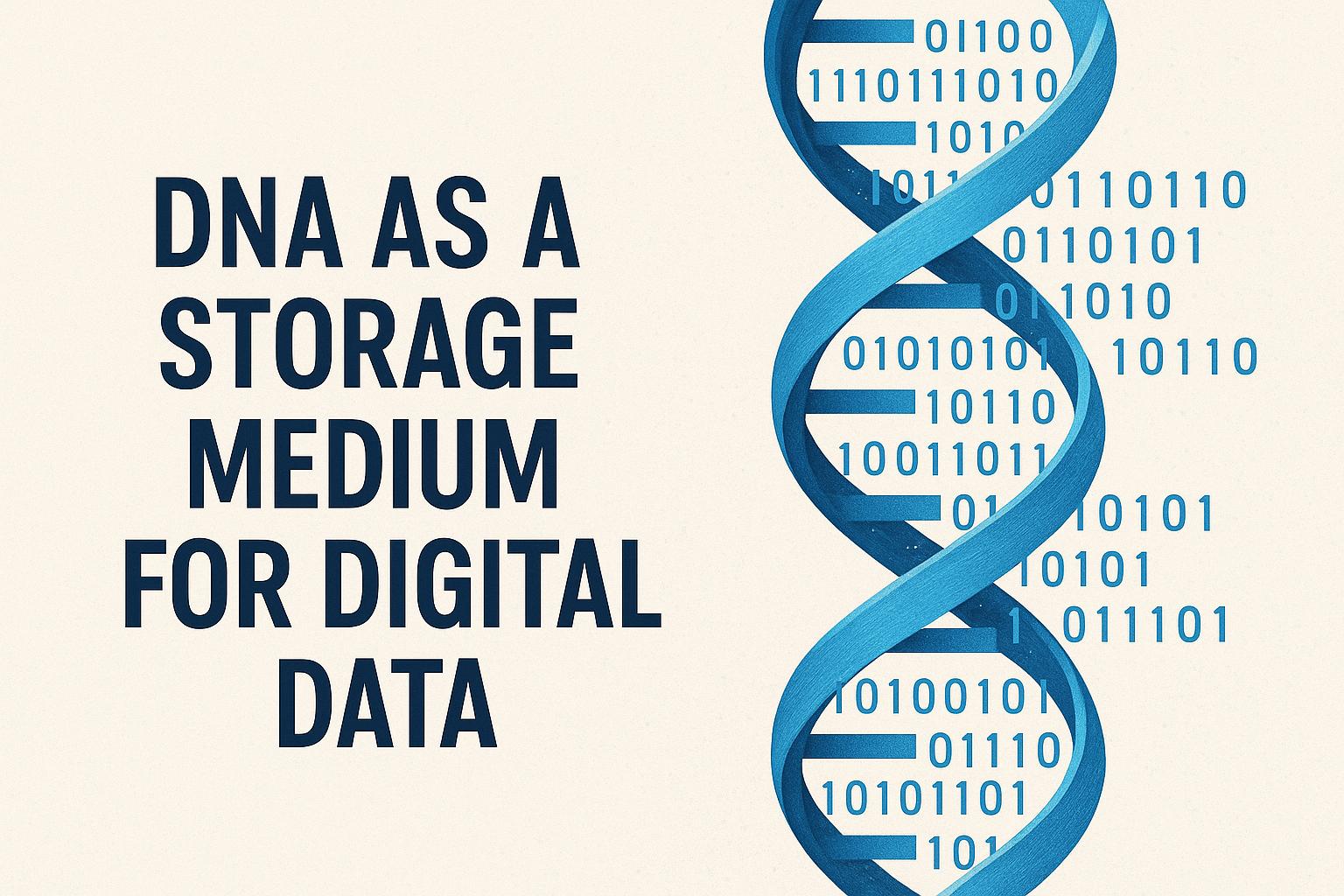
The process of encoding digital data into DNA involves a fascinating conversion of binary data into a sequence of nucleotides—the basic building blocks of DNA. This conversion begins with translating the binary system of zeros and ones, commonly used in electronic data storage, into the four-character genetic language of DNA, consisting of adenine (A), cytosine (C), guanine (G), and thymine (T).
Once the binary data has been translated into a nucleotide sequence, DNA synthesis comes into play. During synthesis, the corresponding DNA strands are physically created to match the encoded data sequence. Although the current methods for synthesizing DNA are considered expensive and labor-intensive, there is active research focused on advancing these techniques, aiming to reduce costs and enhance efficiency. Such developments will be crucial for DNA storage to transition from a theoretical concept to a feasible, practical solution.
The Challenges in Using DNA for Storage
Despite its promising potential, the adoption of DNA as a mainstream storage medium faces several challenges that must be surmounted. A significant concern is the cost associated with the synthesis and sequencing processes, which are presently not economically viable for large-scale data storage purposes. As these costs remain high, DNA storage continues to be out of reach for many practical applications in data archiving and retrieval.
Furthermore, the speed of data retrieval and writing poses another challenge. In comparison to modern digital storage technologies, the processes involved in accessing and writing data in DNA are slower, an aspect that requires substantial improvement to enable DNA storage technologies to compete favorably.
Another critical hurdle lies in ensuring data retrieval accuracy. During the retrieval process, errors can occur when decoding the stored data back into its original digital form. However, researchers are developing sophisticated error-correcting algorithms to overcome this issue, enhancing the reliability and accuracy of DNA data storage and retrieval systems.
Future Prospects and Developments
As scientific and technological research progresses, the future prospects for DNA storage appear promising and could revolutionize the way we approach data archiving. Improvements in DNA synthesis and sequencing technologies are anticipated to address the current challenges of cost, speed, and accuracy, thereby unlocking DNA storage’s full potential.
The successful adoption of DNA storage could reshape data infrastructure on a global scale, offering a secure, high-density solution capable of preserving immense quantities of information for millennia. Such advancements in DNA storage could prove indispensable in addressing the growing global demand for data storage, especially in an increasingly digital and data-driven society.
This still-evolving field opens opportunities for practical applications across various sectors, including medicine, science, and information technology, and possesses the potential to fundamentally transform our relationship with digital information. For individuals and organizations interested in staying informed on the latest developments and research breakthroughs in DNA storage technology, research-oriented websites offer valuable insights and detailed explorations, serving as gateways to the intricacies of genomic technologies.
Ultimately, as DNA storage continues to develop and mature, it represents more than just an innovative storage solution; it signifies a visionary step towards redefining how humanity will store and safeguard its most valuable digital information in the future. The ability to leverage the natural structure of DNA, harnessing its advantages for data storage, exemplifies an intersection of biology and technology that could lead to groundbreaking advancements in both fields.