Introduction to DNA Vaccines
DNA vaccines represent a relatively new approach to immunization that leverages the body’s natural cellular machinery to produce an immune response. Unlike traditional vaccines, which often use weakened or inactivated forms of a pathogen, DNA vaccines utilize genetic material to prompt an immune response.
In this expansive look at DNA vaccines, we’ll explore their mechanism of action, outline the advantages they offer, delve into their simplicity and versatility, and candidly discuss the challenges that must be addressed for them to reach their full potential.
Mechanism of Action
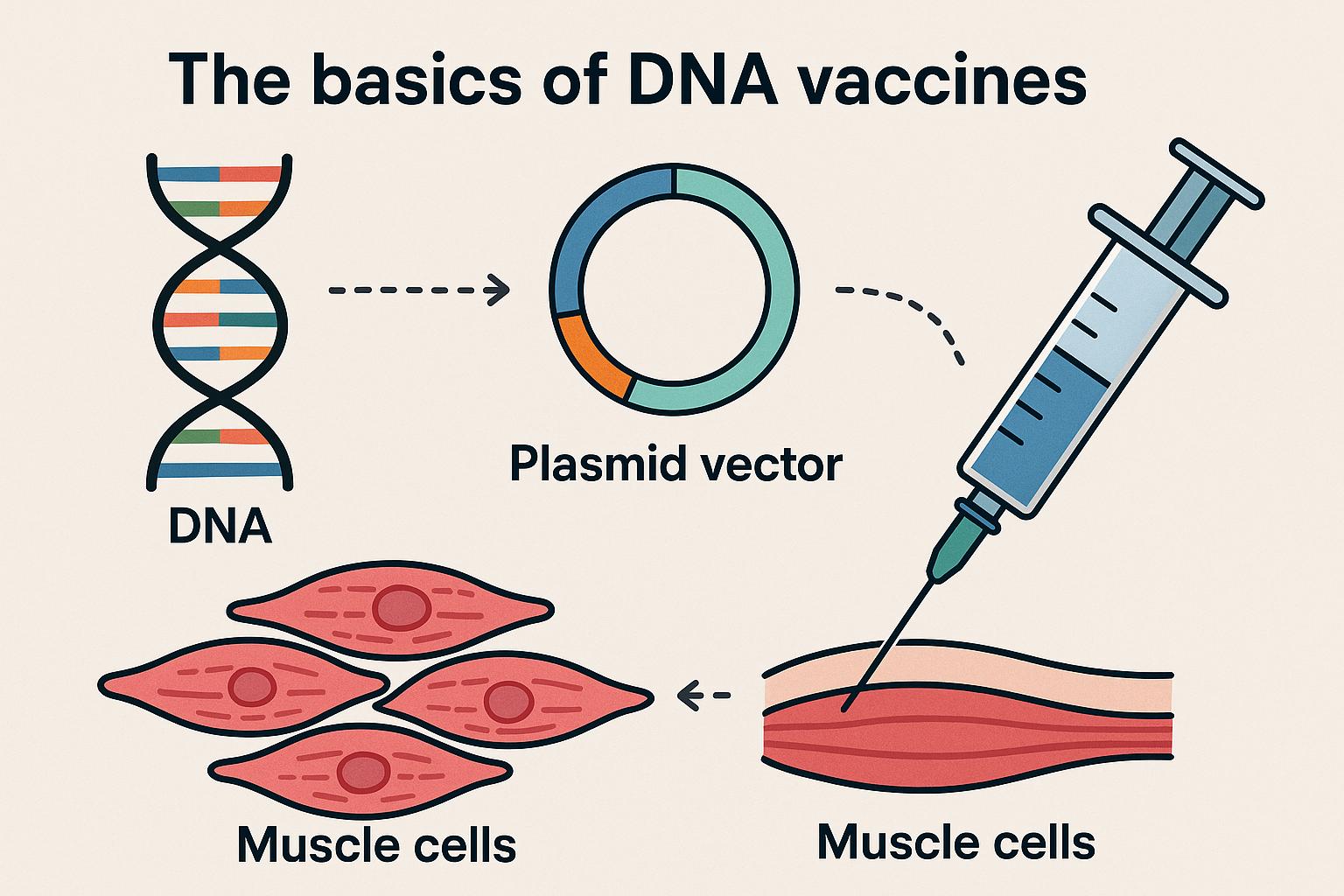
DNA vaccines work by introducing a small, circular piece of DNA known as a plasmid into the body. These plasmids are engineered to contain specific genes that code for antigens associated with the pathogen targeted by the vaccine. Understanding how this system functions provides insight into the innovative nature of DNA vaccines.
Upon administration, these plasmids are introduced into host cells. The host cell’s natural machinery is now hijacked beginning a process where these genetic sequences are translated into antigen proteins. These proteins are abbreviated components of the actual pathogen but are enough to train the immune system. Presented on the surface of cells, these antigens serve as alerts to the immune system, teaching it to recognize these elements as foreign when it encounters them in the future. The immune system’s memory cells, primarily T-cells and B-cells, are activated and prepared to mount rapid responses if the true pathogen invades later.
Advantages of DNA Vaccines
The advantages provided by DNA vaccines set them apart as promising alternatives to traditional immunizations. One of their prominent benefits is their inherent stability. Because the vaccines consist of DNA rather than proteins or live virus particles, they are less prone to degradation. This characteristic significantly enhances their practicality in terms of transportation and storage. Such stability is especially beneficial in regions where maintaining a cold chain for traditional vaccines is challenging due to limited refrigeration facilities.
Another advantageous trait of DNA vaccines is their rapid design and production capabilities. This aspect becomes particularly pertinent in the face of emerging infectious diseases. When a novel pathogen appears, the ability to quickly devise a vaccine that uses its genetic information accelerates the timeline for developing effective responses, supporting public health efforts and ensuring quicker responses to global health challenges.
Simplicity and Versatility
The absence of a need to cultivate live pathogens is another benefit of the DNA vaccine production process, leading to overall simplicity. This not only contributes to safety but also facilitates the scaling up of production to meet large demands, a critical aspect in the context of widespread outbreaks. Moreover, versatility characterizes DNA vaccines due to advances in genetic engineering. Scientists can modify the gene sequences inserted into the plasmid to target different pathogens effectively. This adaptability makes DNA vaccines potential candidates for dealing with multiple infections by simply tweaking the vaccine’s genetic composition.
The ability to combine multiple antigens in a single vaccine also helps broaden the spectrum of infections that a DNA vaccine can protect against. This flexibility opens the door to creating more comprehensive preventive measures against diseases.
Challenges and Considerations
While DNA vaccines hold immense promise, several challenges remain that need to be addressed to harness their full potential effectively. A primary concern is the efficient delivery of DNA sequences into host cells. Various delivery techniques, such as electroporation, where brief electrical pulses increase cell permeability, have enhanced the success of delivery. Nevertheless, the scaling of such techniques remains challenging, particularly for administering vaccines to large populations.
Additionally, there are concerns about the long-term stability of plasmid DNA once inside host cells. Achieving prolonged expression periods without degradation is crucial for sustained immune protection. Further, there are ongoing studies examining the potential integration of plasmid DNA into the host genome, as unexpected integrations can potentially lead to unintended genetic alterations. Hence, these aspects demand rigorous research and development to refine DNA vaccines.
Researchers also consider the human body’s immune tolerance issues, which could impact the extent to which these vaccines elicit an immune response. As much as the immune system’s ability to fend off a full-fledged pathogen is desirable, it is also vital that the response remains controlled and devoid of harmful side effects.
The intricacies and nuances of DNA vaccines indicate that, although they present a bright future for immunization strategies, there is no shortage of areas that require attention before these vaccines become mainstream across various applications.
For more detailed information on the topic, you might want to explore sources such as the Nature Reviews or Journal of Biotechnology.
In conclusion, while DNA vaccines are promising, ongoing research is required to address these challenges and to fully understand their potential impact on global health. The innovation inherent in DNA vaccines combines cutting-edge biotechnology with practical benefits. Continued exploration and optimization will hold the key to unlocking broader applications, potentially revolutionizing our approach to preventing infectious diseases and significantly impacting public health initiatives worldwide.